
How To Clean Car Engine With Degreaser
Keeping your engine bay clean does more than look good — it helps spot leaks, prevents grime buildup, and extends component life. In this guide, we walk you through a safe, effective deep clean that removes frozen oil and restores engine shine. We use a purpose-made degreaser, detailing brushes to agitate stubborn deposits, and a high-pressure washer to rinse away contaminants. Afterwards, microfiber cloths and a blower ensure thorough drying while protecting electrical components. Safety and preparation are key: we’ll show you how to shield sensitive parts, apply chemicals correctly, and work methodically to avoid damage. Whether you’re a DIY enthusiast or prepping a vehicle for resale, this step-by-step walkthrough will give you the confidence to clean your engine bay properly.
Continue reading — we’ll explain every step in detail so your engine looks great and stays protected. Let’s get started safely now.
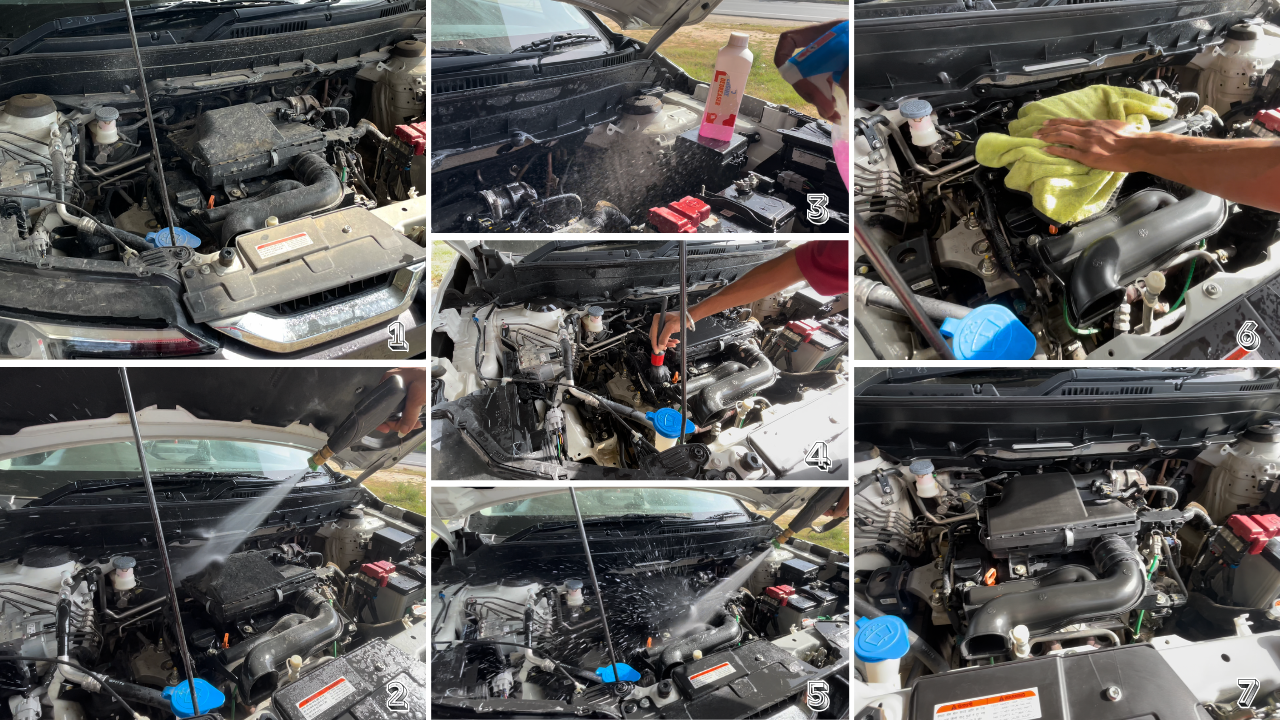
Cover Electrical Parts & Switches
Before starting any engine cleanup, it is extremely important to cover all electrical parts and switches to prevent damage or mechanical issues. Water and cleaning chemicals can harm sensitive circuits, causing malfunctions or even short circuits. Begin by carefully covering the battery terminals, sensors, wiring connections, fuse box, and other exposed circuits with plastic or protective covers. This ensures that no moisture enters while you’re using degreaser, high-pressure water, or brushes. Taking a few minutes to secure these components adds an extra layer of safety, protecting your vehicle’s electronics and ensuring a smooth and risk-free engine cleaning process.
High Pressure Wash
The next step in engine cleaning is the high-pressure wash, which helps remove loose dust, dirt, and surface grime from the hood and engine bay. Using a controlled spray, we carefully wash away contaminants without targeting sensitive electrical parts. This process ensures a cleaner surface, making it easier for the degreaser to penetrate and work effectively on stubborn oil and grease stains. A proper high-pressure wash prepares the engine bay for deeper cleaning and restores a fresh, dirt-free look.
How To Apply Degreaser
To apply degreaser correctly, we prepare a spray bottle with a 70% degreaser and 30% water mix for effective yet safe cleaning. The solution is sprayed evenly across the entire engine bay, ensuring all greasy and oily areas are covered. Once applied, we let the degreaser sit for a few minutes, allowing it to break down frozen oil and stubborn grime. Afterward, a detailing brush is used to gently scrub every surface, loosening buildup and ensuring deep cleaning before rinsing in the next step.
After Wash To Remove Degreaser
After applying and scrubbing the degreaser thoroughly, the next step is to wash it off completely to avoid residue buildup. Using a high-pressure washer, we carefully rinse the entire engine bay, ensuring every trace of degreaser, dirt, and frozen oil is removed. Focus on all areas where the chemical was applied, but be mindful to avoid direct spray on sensitive electrical components. This step not only clears away loosened grime but also leaves the engine bay refreshed and free from oil stains, preparing it for drying and the final finishing touches.
Last Step To Dry Engine
The last step to dry the engine is crucial for safety and a perfect finish. After thoroughly washing and removing the degreaser, we use a blower with high-pressure air to remove water from every corner of the engine bay. Next, a microfiber cloth is used to wipe surfaces gently, ensuring no moisture remains. Special attention is given to sensors, circuits, and switches to double-check they are completely dry. Once drying is complete, a light polish can be applied to plastic parts, restoring shine and giving the engine a fresh, like-new appearance.
Final Thoughts
Cleaning your engine bay may seem challenging, but with the right steps, it becomes a safe and rewarding process. By first covering all electrical components and switches, you protect your car from potential damage. A high-pressure wash removes loose dirt, preparing the surface for a deeper clean. Applying a degreaser solution and scrubbing with a detailing brush breaks down stubborn frozen oil. Following this, a thorough rinse clears all residue, and finally, drying with a blower and microfiber cloth ensures a spotless, safe finish. Adding polish on plastic parts restores shine and makes the engine look like new. In this way, we do engine bay cleaning using degreaser not only enhances aesthetics but also helps maintain long-term performance.
Thanks for reading our Engine Bay Cleaning blog. Please check out our Engine Cleaning video below to visualize every step we’ve explained here and see the transformation in action.